

Nexsymp: 1st International Symposium on Sciences, Technical Research, and Robotics (STERO 2026)
Physical AI: Architecting Resilience and Sustainability Beyond Efficiency
The Organising Committee is proud to announce the 1st International Symposium on Sciences, Technical Research, and Robotics (STERO 2026). Hosted under the NexSymp series, this inaugural event aims to bridge the gap between theoretical scientific inquiry and the physical application of intelligent systems.
As we enter an era where artificial intelligence moves beyond screens and into the physical world, STERO 2026 provides a premier platform for researchers, engineers, and scientists to discuss the evolution of Physical AI. This year’s theme, “Architecting Resilience and Sustainability Beyond Efficiency”, challenges the status quo by focusing on how robotic and technical systems can be built to endure environmental shifts and contribute to a sustainable global infrastructure.
STERO 2026 invites original research papers, case studies, and technical reports across a broad spectrum of disciplines. The symposium focuses on how “Physical AI”—the integration of AI into physical bodies and materials—can solve complex real-world problems.
Interested domains of the symposium include, but are not limited to:
- Robotics & Autonomous Systems: Human-robot collaboration, swarm robotics, and soft robotics.
- Physical AI & Material Science: Smart materials, embedded intelligence, and bio-inspired design.
- Resilient Infrastructure: AI-driven structural health monitoring, disaster-response robotics, and adaptive engineering.
- Sustainable Technologies: Green energy harvesting for robotics, circular economy in tech manufacturing, and low-power AI processing.
- Applied Sciences: Computational physics, chemical sensing in robotics, and mathematical modeling for complex systems.
- Technical Research & Ethics: The socio-economic impact of Physical AI and the ethics of autonomous hardware.
Submission and Publication
| Track 1: MMU Press Journals (Registration fee: Free) |
Track 2: Associated Journals (Scopus) (Registration fee: USD60) |
|---|---|
| • Pathway to publication in MMU Press journals. • Free (No APC)  Robotics, Automation & Applied SciencesSubmission via International Journal on Robotics, Automation and Sciences (IJORAS) ISSN: 2682-860X: Robotics, Automation & Applied SciencesSubmission via International Journal on Robotics, Automation and Sciences (IJORAS) ISSN: 2682-860X: (select under section: NexSymp2026(Tech)) Engineering & Applied Physics Submission via Journal of Engineering Technology and Applied Physics (JETAP) ISSN: 2682-8383:
Paper Submission Guidelines (OJS Manual):
|
• Publication via external partner Scopus journals. • APC/Publication fees payable directly to the journal upon acceptances 
Associated Scopus-indexed Journals*:
*Additional associated journals may be added periodically. |
Authors who have submitted a new paper via OJS or CMT are required to complete the Paper Submission Form here: Paper Submission Form
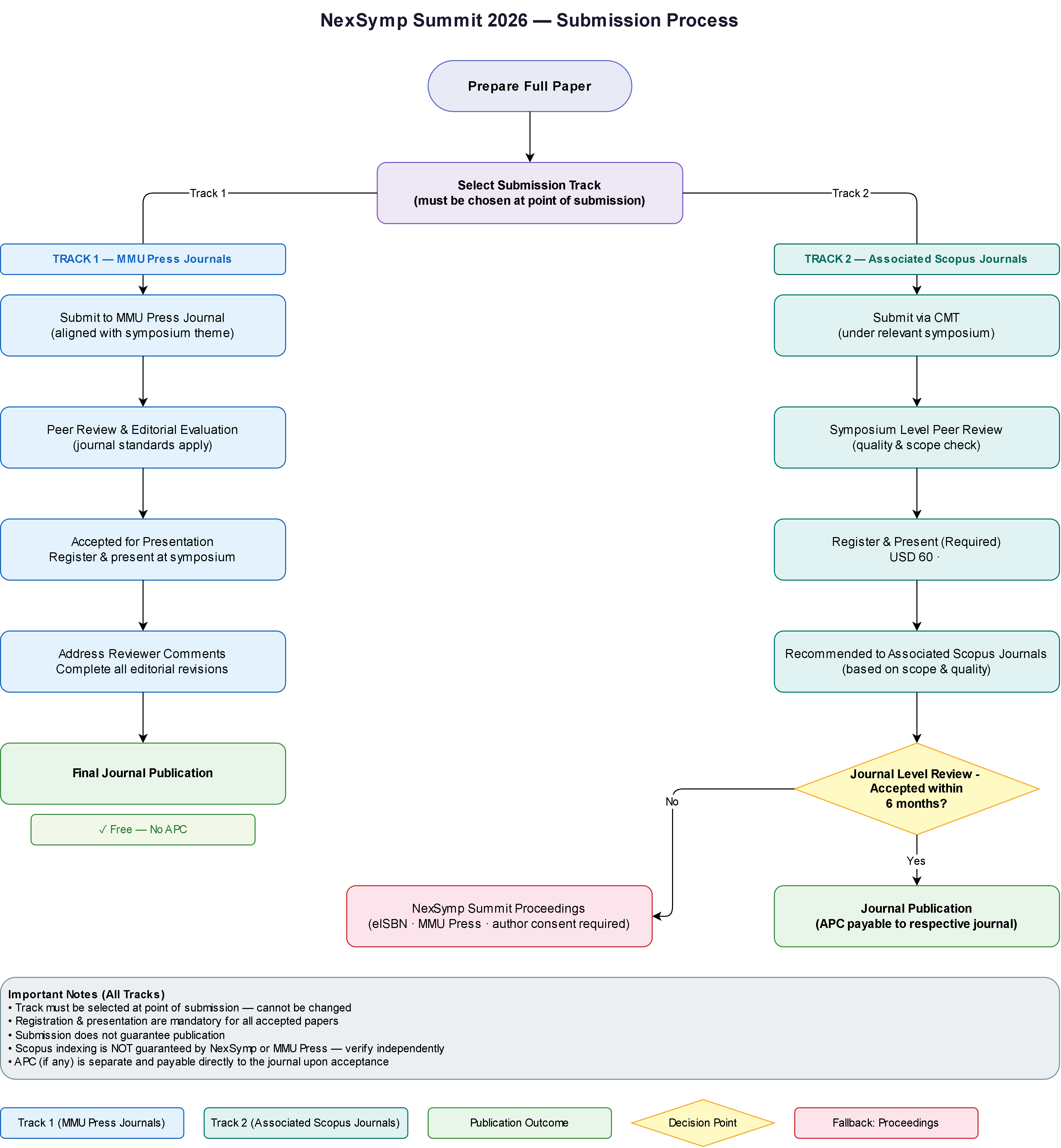
Publication Notes
- All submissions are subject to peer review and editorial decision.
- Acceptance for presentation does not guarantee final journal publication as it is subject to authors completing all required revisions and editorial requirements.
- Final publication decisions rest with the respective journal editors.
- APC/Publication fees (if applicable) are separate from the NexSymp registration fee and payable directly by the authors to the respective journals/publishers upon acceptance. Publication fees and arrangements may vary depending on the respective journal’s review, editorial, and publication procedures under the symposium collaboration arrangement.
- Important: While Track 2 provides access to journals that are currently Scopus-indexed, Scopus indexing is not guaranteed by NexSymp Summit 2026 or MMU Press. Indexing status is determined solely by the respective journals and indexing bodies, and may change at any time. Authors are advised to verify a journal’s current indexing status independently before submission.
- Papers not selected for associated Scopus-indexed journals may be considered for the NexSymp Summit Proceedings (eISBN) published by MMU Press, subject to editorial review and quality requirements.
| Track 1: MMU Press Journals | Track 2: Associated Journals (Scopus) | |
|---|---|---|
| Registration fee | Free | USD 60 |
| APC/ Publication fees | None | May apply (payable to the journal) |
| Submission system | Direct submission to MMU Press journals (OJS) | CMT |
| Publication scope | MMU Press journals | Associated Scopus-indexed journals |
| Fallback if not published | Not applicable | NexSymp Summit Proceedings (eISBN) |
KEYNOTE SPEAKERS
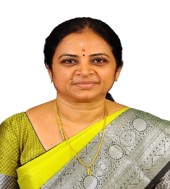
Dr.P. Meenakshi Devi
Principal and Professor
K.S.R. College of Engineering, Anna University, India
Dr. P. Meenakshi Devi is a distinguished academician currently serving as Principal and Professor in the Department of Information Technology at K.S.R. College of Engineering. She completed her B.E. in Computer Science and Engineering from Bharathiyar University in 1994, M.E. in Computer Science and Engineering from Thiagarajar College of Engineering in 2003, and obtained her Ph.D. in Information and Communication Engineering from Anna University in 2011.
Dr.P. Meenakshi Devi has extensive expertise in Wireless Sensor Networks, Machine Learning, Network Security, Image Processing, Deep Learning, and Mobile Ad hoc Networks. She has published numerous research papers in reputed international journals and conferences indexed in Scopus, Springer, IEEE, and other leading databases. Her recent research contributions focus on breast cancer classification, glaucoma diagnosis, smart grid prediction, wireless rechargeable sensor networks, and AI-driven healthcare applications. She has also published patents in innovative domains such as AI-enabled wind turbine temperature control, smart agriculture pest capturing devices, and renewable energy charging stations for electric vehicles. Her research and academic leadership have significantly contributed to the advancement of engineering education and interdisciplinary technology research.
Dr. P. Meenakshi Devi continues to mentor students, researchers, and faculty members while actively promoting innovation, quality education, and research excellence in the field of Information Technology.
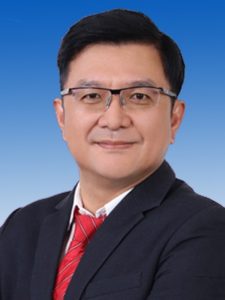
Prof. Dr. Loo Chu Kiong
Professor
University Malaya
Prof. Dr. Loo Chu Kiong is a distinguished researcher at the Universiti Malaya. His work spans Lifelong Machine Learning, Edge AI, and Quantum-Inspired Machine Intelligence, with deep applications in autonomous robotics and digital healthcare. Prof. Loo’s international standing is reflected in prestigious fellowships from leading global institutions — including the Fulbright Fellowship (US), Georg Forster Fellowship by the Humboldt Foundation (Germany), JSPS Fellowship (Japan), and the Belt & Road Academic Fellowship (China). His contributions have also been recognized nationally, earning him the Malaysia Research Star Award (2019) and the Top Research Scientist Malaysia distinction (2020). Beyond academia, Prof. Loo actively bridges research and industry as co-founder of UMCH Sdn. Bhd., an AI-driven digital healthcare spin-off, and serves as a Governor Member of the Asia Pacific Neural Network Society (APNNS).
INVITED SPEAKERS
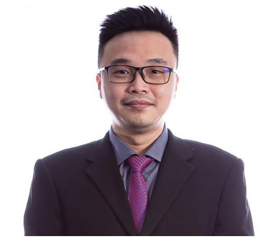
Ts. A.Prof. Dr. Alan Ting Huong Yong
Dean and Associate Professor
University Technology Sarawak
Ts. Associate Professor Dr. Alan Ting HY is a distinguished academic, researcher, technology entrepreneur and higher education leader with over 16 years of experience in computer vision, artificial intelligence, image processing, software engineering, digital transformation and Internet of Things (IoT). Currently he is serving as the Dean of School of Computing & Creative Media (UTS) and CEO of Formeta PLT. He demonstrated success in academic leadership, research commercialization, grant acquisition, curriculum innovation and strategic industry collaboration. His has led multi-million-ringgit digital transformation projects and supervised numerous research initiatives.
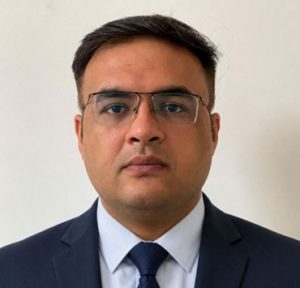
Dr. Sagar Juneja
Associate Director (Research)
Chitkara University, India
Dr. Sagar Juneja leads capacity-building initiatives at Chitkara University and heads its Government-funded Pre-Incubation Centre and Industry–Academia Collaboration Centre. With 16 years of experience in electronics, product design, and technology commercialization, he has previously held leadership roles at Texas Instruments and RS Components. He has authored 30 research publications, edited a book, filed 27 patents (11 granted), and has been actively involved in organizing and leading major international conferences. His contributions have been recognised through several research, editorial, and innovation awards.
Dates and Registration
|
Description |
Deadline |
|
Full paper submission deadline |
|
|
Paper acceptance notification |
15 August 2026 |
|
Camera ready submission |
24 August 2026 |
|
Registration deadline |
|
| Symposiumdate |
29-30 September 2026 |
REGISTRATION FEES AND PAYMENT INFO
Registration and presentation at NexSymp Summit 2026 are required for all accepted papers to proceed with publication consideration.
Fee Structure
|
Tracks |
Registration Fees (excl. APCs) |
| Track 1: MMU Press Journals | Free |
| Track 2: Associated Journals (Scopus) | If you require an invoice, please fill up this form |
What the Registration Fee Covers
- Conference participation
- Presentation of accepted paper
- Access to the selected submission tracks
Important Fee Notes
- Registration fee covers symposium participation only.
- APC/Publication fees (if applicable) is separate from the registration fee and payable directly by the authors to the respective journal upon acceptance.
- Each accepted paper requires at least one registered author.
- Non-registration or non-presentation may result in withdrawal from publication consideration.
Who Should Attend?
- Academicians
- Industry professionals
- Postgraduate students
Chair:
Chair – Prof. Dr. Wong Eng Kiong (Multimedia University, Malaysia)
Co-Chair – Associate Professor Dr. You Ah Heng (Multimedia University, Malaysia), Dr. Min Thu Soe @ M Sait (Multimedia University, Malaysia)
Program Chair – Associate Professor Ir. Dr. Wong Wai Kit (Multimedia University, Malaysia)
Technical Chair – Dr. Sun Cha Chee (Multimedia University, Malaysia), Ts. Dr. Palanisamy Chockalingam (Multimedia University, Malaysia), Dr. Thangavel Bhuvaneswari (Multimedia University, Malaysia)
Collaboration Chair – Prof. Dr. Lim Heng Siong (Multimedia University, Malaysia), Sangeeta Giri (Indrashil University, India), Dr. A.V. Balan (KSR College of Engineering, India)
Publicity Chair – Dr. Min Thu Soe @ M Sait (Multimedia University, Malaysia)
Publication Chair – Ts. Dr. Nur Hasanah Binti Ali (Multimedia University, Malaysia)
Technical Program Committee:
- Dr Paritosh Agnihotri (Indrashil University, India)
- Dr Rajesh Patel (Indrashil University, India)
- Associate Prof. Dr. Maxine Yee Swee Li (University of Nottingham Malaysia, Malaysia)
- Dr. Tan Thian Khoon (University of Nottingham Malaysia, Malaysia)
- Prof Dr M. Pallikonda Rajasekaran (Kalasalingam Academy of Research & Education, India)
- Prof Dr Manikandan Sridharan (E. G. S. Pillay Group of Institution, India)
- Dr S. Senthilkumar (E. G. S. Pillay Group of Institution, India)
- Dr Ting Fung Fung (Monash University, Australia)
CMT Acknowledgement
The Microsoft CMT service was used for managing the peer-reviewing process for this conference. This service was provided for free by Microsoft and they bore all expenses, including costs for Azure cloud services as well as for software development and support.
Collaborators:







Technical Sponsor: